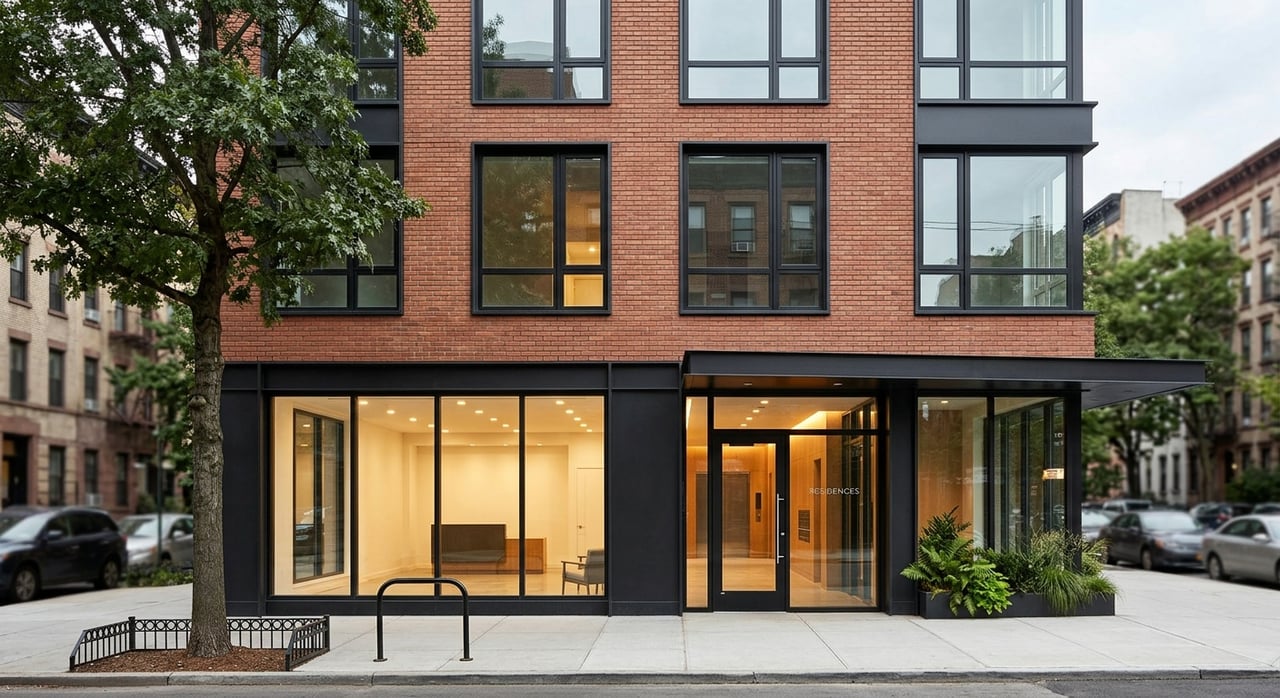
Big opportunities in Belleville are not limited to single buildings. They are showing up in how the township is shaping entire corridors for mixed-use and multifamily growth. If you are looking at Belleville as an investor, developer, or property owner, you need more than broad market optimism. You need a grounded view of where the township is directing growth, what recent projects say about demand, and how to underwrite with local rules in mind. Let’s dive in.
Why Belleville is drawing attention
Belleville is a compact Essex County market with real density, steady household formation, and regional access that supports both residential and commercial demand. The township’s 2024 population estimate was 38,672, up from 38,222 in the 2020 census, with 14,356 households and a median household income of $90,140. Those numbers matter because they point to a built-in customer base for housing, retail, and service uses.
The local renter profile also helps explain why newer multifamily product is gaining traction. Belleville reported a median gross rent of $1,639, a mean commute time of 32.4 minutes, and broadband penetration of 91.1%. That mix suggests many renters value convenience, connectivity, and access to transportation just as much as unit size.
Belleville is also a diverse market. About 38.1% of residents were foreign-born, and 57.8% spoke a language other than English at home. For investors and leasing teams, that reinforces the importance of thoughtful marketing, clear communication, and a tenant experience that reflects the reality of the local audience.
Where Belleville wants growth
Belleville’s growth story is not random. The township’s master plan identifies Washington Avenue as a central revitalization corridor and points to mixed-use redevelopment, shared parking, corridor improvements, and infill development along Washington Avenue, Main Street, and the Silver Lake area.
That is important because it gives investors a clear read on municipal intent. Belleville is not just accepting denser projects. It is signaling that mixed-use, walkable, corridor-based development fits its long-term planning goals.
The zoning code backs that up. In the B-G Commercial Residential Mixed-Use district, mixed-use buildings are permitted with ground-floor retail or restaurant uses and residential or office space above. Street-level activity is emphasized, while auto-oriented uses are restricted, which tells you a lot about the product type the township wants to see more of.
Why mixed-use makes sense here
In Belleville, mixed-use is not only a planning concept. It is a practical response to how people live and move through the township. Strong roadway access, light-rail connectivity to Newark Penn Station and PATH, and established commercial corridors all support buildings that combine homes with daily-needs retail, food, and service uses.
The township’s master plan highlights access to the Garden State Parkway and Routes 7, 21, and 3 as core advantages. That regional connectivity widens the renter and customer pool. It also helps explain why Belleville can support projects that serve both local residents and people moving through the area for work, errands, or health-care visits.
Ground-floor retail can also strengthen residential absorption when it fits the corridor. A building that adds convenience and activity to the street often feels more connected to the neighborhood than a standalone apartment project. In Belleville, that local fit matters because the township has been explicit about active street fronts and shared parking strategies.
Recent projects offer real market clues
Several recent and upcoming projects give you a useful look at how the Belleville market is behaving in real time. These are not theoretical examples. They are active proof points for lease-up, pricing, and product positioning.
Rev by Vermella shows fast lease-up
Rev by Vermella at 630 Washington Avenue is one of the clearest local case studies. The 268-unit mixed-use project was reported at 75% leased just four months after hitting the market. It also includes a 19,283-square-foot retail center built for up to 12 stores, plus a piazza intended to serve both residents and the surrounding corridor.
That pace suggests there is meaningful demand for well-executed new product in Belleville. It also shows that mixed-use can work when the residential and retail components are designed to reinforce each other rather than compete for space or visibility.
The Essex points to healthy absorption
The Essex at 78-102 Washington Avenue adds another strong data point. The property includes 158 units and two ground-floor retail spaces, and financing was arranged through a lease-up program while the building was still 50% occupied.
For investors, that matters because it suggests lenders saw enough traction to support the next stage before full stabilization. It does not mean every project will move that smoothly, but it does show that Belleville is producing lease-up results that the market is taking seriously.
Ethos Kelsey shows premium renter demand
Ethos Kelsey at 740 Washington Avenue demonstrates that Belleville can support a more boutique, amenity-rich product as well. Leasing began in spring 2025, with the building expected to open in June 2025. The project includes 104 residences, with rents starting at $2,300.
Its amenity package includes a rooftop pool, coworking areas, guest suites, a pet spa, a dog run, and covered parking. That tells you newer product is competing on lifestyle and convenience, not just on basic housing supply. It also highlights the need to test rent assumptions carefully, since the project is targeting a noticeably higher-price renter than Belleville’s township-wide median gross rent.
Park 11 expands the story beyond Washington Avenue
Park 11 and The Copper Mill at 11 Franklin Avenue show that growth is not limited to one corridor. The next residential phase is planned to bring 175 apartments and 43,000 square feet of retail, while a separate 7,200-square-foot building is expected to welcome Chipotle and Konala in the second quarter of 2026.
This matters because it broadens the investment map. Park 11 also benefits from daily-needs retail and proximity to Clara Maass Medical Center, reinforcing the value of locations tied to regular traffic, convenience uses, and employment anchors.
What the permit pipeline suggests
Belleville issued 45 housing permits in 2024, including 32 multifamily units. That is not a flood of new supply, but it does show the township’s recent residential pipeline remains weighted toward denser housing types.
For investors, that can be read two ways. First, Belleville is still adding multifamily inventory, which supports the long-term case for mixed-use and apartment development. Second, the supply picture does not appear so large that it automatically overwhelms demand, especially if projects are well-positioned and professionally leased.
How to underwrite Belleville realistically
Belleville offers opportunity, but it is not a market for aggressive assumptions. The broader Northern New Jersey multifamily backdrop is constructive, with metro vacancy at 4.7% in March 2025 and average effective rent at $2,520. At the same time, Essex and Bergen rent growth was only a little above 1% year over year, which points to steady absorption without automatic pricing power.
That means your business plan should lean on execution, not wishful rent growth. Belleville’s local examples support this view. Projects are leasing, but success depends on product-market fit, opening rents, concessions, and a clear path to stabilization.
Rent leveling changes the math
One of the most important local factors is Belleville’s rent-leveling ordinance. According to the township’s rent-leveling board, the ordinance applies to multi-dwelling properties with four or more rental units and caps annual rent increases at 5%.
That has direct underwriting implications. If your model depends on sharp in-place rent increases after stabilization, you need to rethink it. In Belleville, conservative revenue growth and disciplined expense management are often more realistic than a strategy built around aggressive post-lease-up rent jumps.
Lease-up strategy matters more than ever
The local project examples make one thing clear: lease-up execution is central to performance. Strong early absorption at Rev by Vermella and financing progress at The Essex show what can happen when leasing momentum builds quickly.
That is where an experienced local advisor can add real value. Opening rents, concession strategy, unit mix, reporting, pre-leasing cadence, and retail tenant selection all matter. In Belleville, they matter even more because the township wants active ground-floor uses, shared parking, and corridor-specific merchandising instead of a generic apartment-only approach.
Infrastructure supports the investment case
Public investment is another piece of the story. In January 2025, Belleville opened its first new municipal parking lot along Washington Avenue in decades, adding 28 spaces with eventual EV charging. The township’s 2024 ordinance list also includes capital work for roads, water-main replacement, sewer improvements, and municipal facilities.
These updates may not be flashy, but they matter for mixed-use performance. Parking, road access, utility reliability, and corridor upgrades all affect leasing, tenant experience, and long-term property appeal. When public investment aligns with the township’s growth corridors, private projects tend to have a stronger foundation.
What investors should watch next
If you are evaluating mixed-use or multifamily opportunities in Belleville, focus on a few practical questions before you move forward.
- Corridor fit: Does the site align with areas the township is actively encouraging for mixed-use and infill growth?
- Retail logic: Is the ground-floor use right for the street, nearby traffic patterns, and daily-needs demand?
- Rent positioning: Are your rents supported by local comps and realistic concession assumptions?
- Lease-up pace: Can your timeline withstand a steady, disciplined absorption period instead of a perfect sprint?
- Regulatory impact: Have you accounted for the township’s rent-leveling rules in your long-term revenue model?
- Infrastructure context: Will parking, access, and public improvements support the user experience your project depends on?
The strongest opportunities in Belleville are likely to come from projects that match municipal goals, fit the corridor, and use disciplined underwriting. This is a market where thoughtful execution can outperform broad-brush optimism.
Belleville’s mixed-use and multifamily growth is being shaped by planning, zoning, infrastructure, and real lease-up performance, not just headlines. If you want to evaluate a site, pressure-test an underwriting model, or shape a leasing strategy that fits Belleville’s corridors, working with a local advisor can make the process far clearer. To talk through your next move, connect with Donna Keena.
FAQs
What makes Belleville attractive for mixed-use investment?
- Belleville offers regional highway and transit access, designated revitalization corridors, zoning that supports mixed-use buildings, and recent projects that show real leasing traction.
What areas in Belleville support mixed-use growth?
- Belleville’s master plan points to Washington Avenue, Main Street, and the Silver Lake area as key places for mixed-use redevelopment, corridor improvements, and infill growth.
How strong is multifamily demand in Belleville?
- Recent projects suggest demand is healthy, with Rev by Vermella reaching 75% leased within four months and The Essex showing financing progress during lease-up rather than after full stabilization.
How does Belleville’s rent-leveling ordinance affect multifamily investing?
- For multi-dwelling properties with four or more rental units, the township caps annual rent increases at 5%, so investors should use conservative revenue-growth assumptions.
What should investors know about new apartment pricing in Belleville?
- Newer projects may target a higher-price renter segment than the township-wide median gross rent, so comp selection, concessions, and amenity positioning should be tested carefully.
How can a local real estate advisor help with Belleville development?
- A local advisor can help assess corridor fit, guide municipal approvals, shape lease-up strategy, calibrate rents and concessions, and support retail tenant selection for mixed-use projects.